The Three Musketeers
Holding Out for a Hero ▸ Stiles Stilinski (2)The Three Musketeers is the affectionate collective name for Carson Bradley, Stiles Stilinski, and Scott McCall, the original trio whose loyalty provides the emotional center of the story. The expression signifies more than friendship: it names a mutual defense pact formed under pressure, one that survives werewolves, hunters, murder investigations, forbidden romance, and the accumulating cost of violence.
Identity and Origin
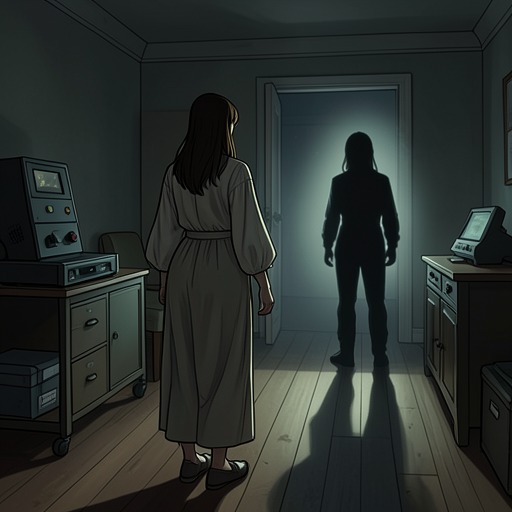
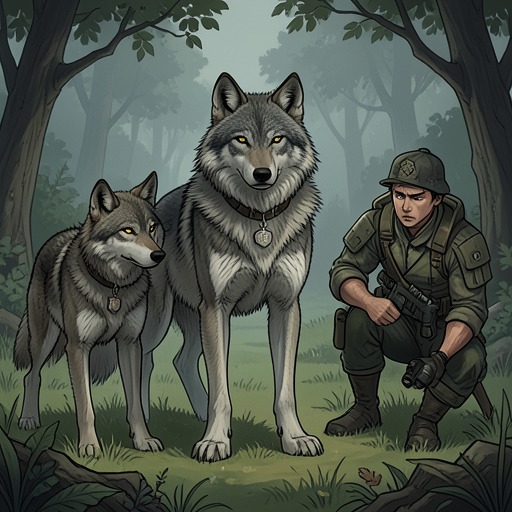
The trio's defining identity emerges from shared involvement in the events surrounding Scott McCall's transformation. After Stiles Stilinski eavesdrops on a call, the three enter the woods, where Scott is bitten. His subsequent strength, speed, and heightened senses lead them to conclude that Scott McCall is a werewolf. Their first response is practical and protective: they consider chaining Scott during full moons so that nobody will be harmed. The expression therefore grows out of collective responsibility rather than mere social familiarity.
The name also carries an explicit literary and heroic allusion. Carson Bradley describes them as the “three musketeers,” presenting the group as a compact unit whose members face danger together. The comparison is less about swashbuckling glamour than about solidarity: the trio is outnumbered by supernatural and human threats, yet its members repeatedly compensate for one another's weaknesses.
Loyalty Under Supernatural Threat
The Three Musketeers remain intact amid the conflict between werewolves and hunters. The Argent family represents a human force committed to eliminating supernatural threats, while Scott's relationship with Allison Argent makes the danger more intimate and complicated. Derek Hale's mysterious presence adds another source of uncertainty. Against this combination of violence, secrecy, and forbidden romance, the original trio “made it out alive,” retaining both its members and its shared commitment.
Their survival is not presented as a return to innocence. The group becomes more cautious, more mature, and more hardened by death. The expression thus contains a contrast between playful camaraderie and the grim world that tests it. Calling them The Three Musketeers preserves the language of youthful adventure even as the characters learn that escape from one danger does not make them permanently safe.
Investigation and Shared Knowledge
The trio functions as an investigative partnership as well as an emotional unit. Stiles Stilinski's knowledge of movie monsters and lore helps the group identify Scott's condition, turning frightening physical changes into a problem they can interpret. Later, their conversations continue to join observation, suspicion, and mutual questioning. When Stiles reports that a grave has been robbed and a liver stolen, Carson Bradley and Scott McCall immediately test the disturbing possibility that Lydia Martin could be involved, asking whether she had eaten the liver. Their reactions show the group confronting supernatural evidence through shared reasoning, even when the evidence is grotesque.
The same pattern appears in the investigation surrounding Mr. Lahey's murder and Isaac Lahey's transformation. At school, while other students invent stories about Isaac and focus on whether he killed his father, the trio asks a different question: why Derek Hale offered Isaac the bite. Stiles explains the danger that the bite might either transform or kill its victim, and the group considers whether teenagers may have a better chance of surviving. The Three Musketeers therefore redirects attention from rumor to supernatural causality, using collective knowledge to interpret events that the wider school cannot understand.
Relationships and Emotional Change
The group is also the setting in which Carson Bradley's relationship with Stiles Stilinski develops. Carson realizes that she has fallen for Stiles, while he has already fallen for her without her knowing. Their romance changes the internal balance of the trio but does not dissolve it. When Stiles kisses Carson, Scott McCall reacts with comic displeasure and asks them not to make out in front of him, comparing the experience to watching siblings kiss. The moment makes the friendship feel familial while also acknowledging that Carson and Stiles have become a couple within it.
That combination of romance and friendship is central to the expression's meaning. Carson and Stiles's intimacy does not replace Scott; instead, Scott remains the third member whose presence turns the pair into a continuing unit. The trio's bonds are therefore multiple and overlapping: friendship, romantic attachment, shared danger, and a common obligation to protect one another.
Narrative Significance
The Three Musketeers condenses the story's movement from ordinary adolescence into supernatural responsibility. The expression first evokes a stable friendship, but each recurrence is shadowed by the knowledge that the characters are dealing with murder, transformation, hunters, and possible death. Its repetition creates continuity across otherwise chaotic events, reminding the reader that the group's most decisive achievement is not simply solving mysteries or surviving attacks, but preserving mutual loyalty while everything around them changes.
As a phrase, The Three Musketeers also turns separate incidents into a single emotional narrative. The woods, Scott's bite, the grave robbery, Isaac's threatened transformation, and the trio's changing romantic circumstances become episodes in the history of the same alliance. By the time the characters are described as more hardened by death, the name has acquired weight: it remains playful on the surface, but now signifies endurance, responsibility, and the refusal to abandon the people who entered danger together.